 Skip to content

TL;DR:
- Liquidation pallets are bulk lots of brand-name merchandise sold at significant discounts.
- Success depends on careful evaluation of manifests, condition, and platform choice.
- Realistic ROI ranges from 1.5 to 2.5 times the total purchase and shipping costs.
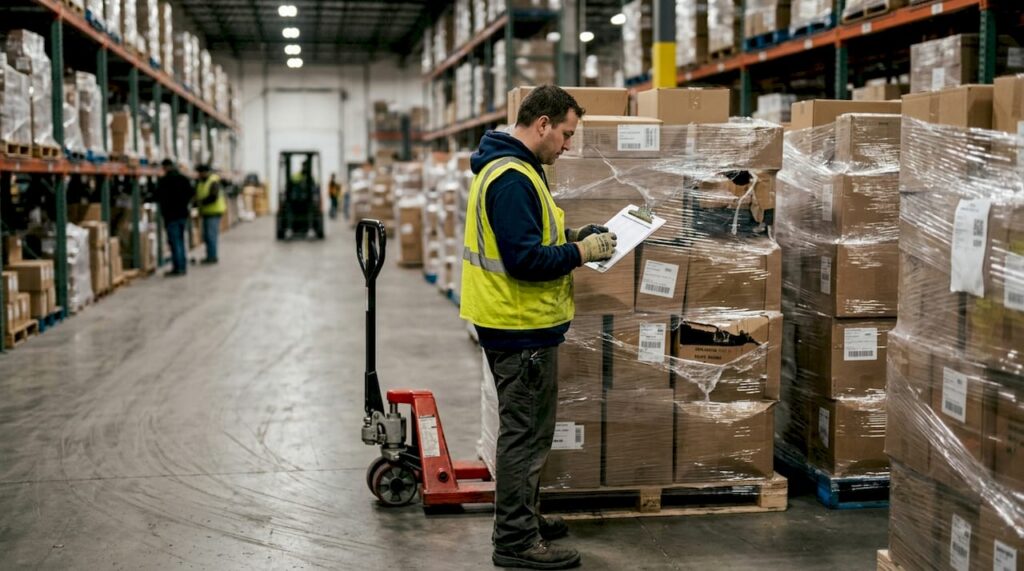
Sourcing affordable, brand-name inventory is one of the biggest challenges resellers face. You want Nike, Lululemon, or Zara at prices that leave room for real profit, but the path from idea to purchase is full of questions. Liquidation pallets are bulk lots of returned, overstock, shelf-pull, or discontinued merchandise sold at steep discounts through auctions or fixed-price B2B platforms. This guide walks you through every step, from understanding what you’re buying to avoiding costly mistakes, so you can build a reliable resale operation with confidence.
Table of Contents
- What are liquidation pallets and why buy them?
- Preparing to buy: Requirements, registration, and platform selection
- Step-by-step: How to evaluate and purchase your pallet
- Troubleshooting, risks, and maximizing results
- Our perspective: What most guides miss about buying liquidation pallets
- Next steps: Where to source liquidation pallets and maximize your ROI
- Frequently asked questions
Key Takeaways
| Point | Details |
|---|---|
| Understand pallet types | Know the difference between manifested, unmanifested, shelf-pulls, and returns to minimize risk. |
| Choose trusted platforms | Buy on established B2B auction sites like B-Stock and Liquidation.com for safer transactions. |
| Analyze manifests and costs | Always check item lists, photos, and factor shipping and processing time when evaluating deals. |
| Start small and scale wisely | Begin with known product niches and sensible purchase sizes to build experience and avoid costly setbacks. |
| Expect variable returns | Actual ROI ranges from break-even to 2.5x depending on item quality and your selling skills. |
What are liquidation pallets and why buy them?
Building on that overview, let’s clarify exactly what liquidation pallets are and why so many retailers and resellers pursue them.
Liquidation pallets are bulk lots of returned, overstock, shelf-pull, or discontinued merchandise that major retailers sell off through B2B auction platforms or fixed-price channels. Instead of restocking or destroying excess inventory, brands like Walmart, Amazon, and Target move it through liquidation networks. You get access to authentic, brand-name goods at a fraction of retail price.
There are four main types of liquidation merchandise:
- Customer returns: Items sent back by shoppers, ranging from unopened to visibly used
- Overstock: New, unsold merchandise that exceeded demand
- Shelf-pulls: Products removed from store shelves to make room for new inventory, often in excellent condition
- Discontinued items: Products no longer carried by the retailer, typically new and sellable
Why do resellers choose liquidation over traditional wholesale? The benefits of liquidation merchandise are hard to ignore when you compare the numbers side by side.
| Factor | Liquidation pallets | Traditional wholesale |
|---|---|---|
| Price vs. retail | 20-80% below MSRP | 30-50% below MSRP |
| Brand access | Major retail brands | Varies by supplier |
| Minimum order | One pallet | Often large MOQs |
| Condition | Mixed (returns to new) | Typically new |
| Risk level | Higher variance | More predictable |
The core appeal is simple. You can access brand-name goods at low cost, in bulk, without the large minimum order quantities that traditional wholesale often requires. For resellers operating on tight budgets or testing new niches, that flexibility is valuable. The tradeoff is that condition and sellability vary more than with standard wholesale, which is why preparation matters.
Preparing to buy: Requirements, registration, and platform selection
Once you understand the appeal, the next step is to prepare for buying and choose your platform carefully.
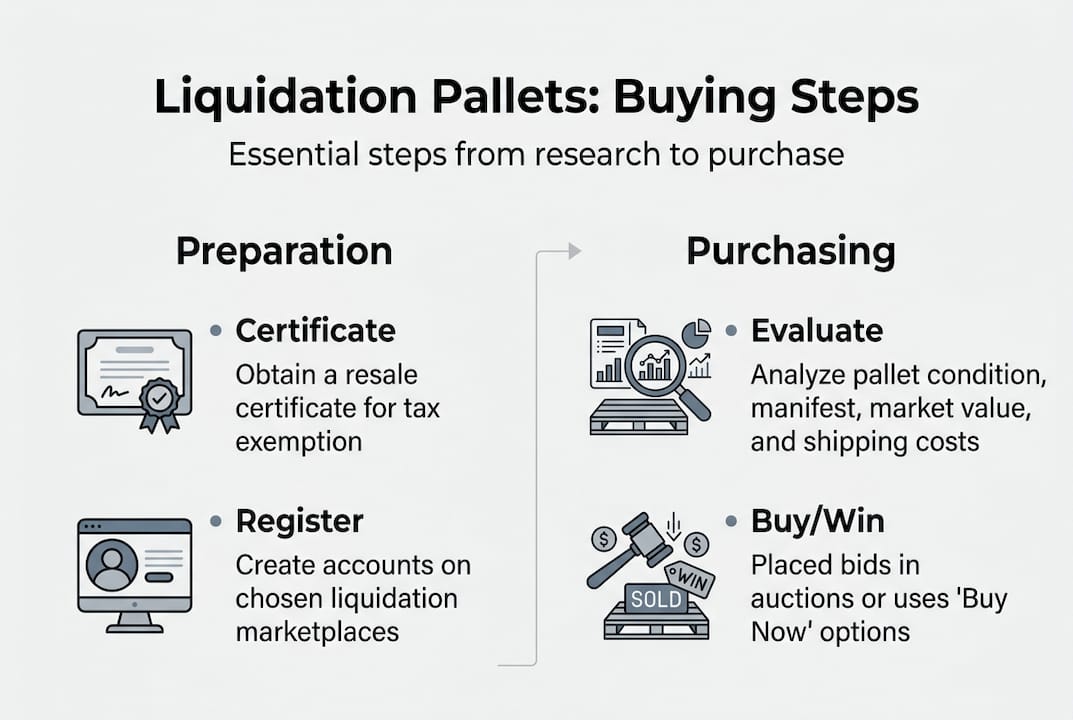
Before you register anywhere, you need a resale certificate (also called a reseller’s permit or sales tax exemption certificate). Most major platforms require this to verify your business status and allow tax-free purchases. You apply through your state’s revenue or taxation department, and the process is usually straightforward.
With your certificate ready, you can register on platforms like B-Stock, Liquidation.com, or Direct Liquidation. Each has a slightly different registration process, but all require basic business information and your resale certificate. Approval typically takes one to three business days.
Here’s how the main buying formats work:
- Auction: You bid against other buyers; price rises with competition
- Buy Now: Fixed price, first-come first-served
- Make Offer: You propose a price; seller accepts, counters, or declines
The three most established platforms in 2026 are:
| Platform | Buying format | Notable sources |
|---|---|---|
| B-Stock | Auction | Amazon, Walmart, Target |
| Liquidation.com | Auction with manifests | Multiple retailers |
| Direct Liquidation | Auction and Buy Now | Walmart, Sam’s Club |
Note that BULQ ceased operations in 2025, so if you see it mentioned in older guides, it’s no longer an option.
For finding local pallets to reduce shipping costs, local liquidation warehouses and regional auctions are worth researching in your area. Local pickup can cut hundreds of dollars from your per-pallet cost.
Pro Tip: Start by browsing completed auctions on B-Stock before bidding. You’ll quickly learn realistic price ranges for specific categories and avoid overbidding on your first purchase.
Choosing the right platform depends on your niche, budget, and risk tolerance. B-Stock connects you directly with official retailer auctions from Amazon, Walmart, and Target, which generally means better transparency and consistency. Liquidation.com offers a wider variety but requires sharper attention to manifest details.
Step-by-step: How to evaluate and purchase your pallet
With your account set up and a platform chosen, here’s how to confidently buy your pallet.
- Review the manifest carefully. A manifest is a detailed list of items included in the pallet, with quantities, descriptions, and sometimes retail values. Always read it fully before bidding or buying.
- Study photos and condition notes. Look for signs of heavy damage, missing packaging, or vague descriptions. If photos are absent, treat that as a warning sign.
- Calculate your true total cost. Add the pallet price plus shipping. Shipping costs run $400 to $800 per pallet for LTL (less-than-truckload) freight. Factor in your time for sorting and listing, roughly 30 hours per pallet for new sellers.
- Choose your niche and pallet type. Prefer shelf-pulls over returns when starting out. Shelf-pulls are closer to new condition and have lower unsellable rates. Returns require more sorting and testing.
- Place your bid or buy. For auctions, use proxy bids (setting your maximum and letting the system bid incrementally) to avoid emotional overbidding. For fixed-price listings, act quickly since quality pallets sell fast.
- Arrange shipping or pickup. Confirm freight carrier options with the platform. Local pickup, when available, saves significantly on logistics costs.
For new buyers, liquidation pallet profitability depends heavily on niche selection. Clothing, accessories, and home goods tend to be more forgiving for beginners than electronics.
“Analyze the top five manifest items by value before committing. If those items are high-defect categories like electronics or small appliances, reconsider the pallet entirely.” Pallet flipping beginners guide 2026
When assessing Amazon return pallet value, divide the total manifest MSRP by four to get a conservative revenue estimate. If that number exceeds your all-in cost, the pallet is worth considering.

Pro Tip: Avoid electronics pallets as your first purchase. Defect rates are high, testing takes time, and resale platforms have strict condition requirements. Start with apparel or accessories to build confidence and cash flow.
Troubleshooting, risks, and maximizing results
Even with a good process, mistakes and risks can cost you. Here’s how to avoid them and increase your success rate.
The most important number to know before you buy: 20 to 50% of items in some pallets may be unsellable or damaged. That range is wide because it depends heavily on pallet type, source, and condition grade. Manifested pallets from Tier 1 sources like B-Stock tend to sit at the lower end of that range.
Common risks to watch for:
- Unmanifested pallets: High variance, no item list, much harder to assess value before buying
- Cherry-picking by middlemen: Some resellers buy directly from retailers and remove the best items before reselling pallets, leaving you with lower-value inventory
- No returns policy: Nearly all liquidation platforms sell as-is, with no recourse if quality is worse than expected
- Shipping damage: Freight handling can damage items in transit; photograph everything on arrival and document damage immediately
- Social media scams: Sellers on Instagram or Facebook offering “exclusive” liquidation deals are frequently fraudulent
For local pallet buying, inspecting pallets in person before purchase eliminates many of these risks.
ROI reality check: Margins of 40 to 120% are possible, but realistic expectations for manifested pallets are 1.5 to 2.5 times your total cost. Experienced sellers report earning $10 to $25 per hour after accounting for sorting, listing, and shipping time. That’s a real business, not passive income.
To maximize results, track every pallet’s performance in a simple spreadsheet. Record purchase price, shipping cost, hours worked, total revenue, and unsellable item count. After five to ten pallets, you’ll have real data to guide smarter buying decisions.
Our perspective: What most guides miss about buying liquidation pallets
After seeing the practical steps and risks, it’s worth sharing a candid view that most guides skip entirely.
Liquidation is not a shortcut to fast money. The math can look attractive on paper, but the effort required to sort, test, photograph, list, and ship individual items from a single pallet is substantial. Profit realities are more nuanced than most promotional content suggests.
The most successful resellers we’ve seen treat liquidation as one part of a larger sourcing strategy. Combining liquidation with stable wholesale creates a more resilient business. Liquidation offers high-risk, high-reward potential while wholesale provides the predictable margins (20 to 60%) that keep cash flow steady.
The scam problem is also worse than most guides admit. Social media is full of sellers offering liquidation pallets with suspiciously low prices and no verifiable sourcing. Stick to the established B-Stock platform and verified marketplaces. If a deal sounds too good, it almost certainly is. Protecting your capital is more important than chasing the biggest discount.
Treat your first three pallets as tuition. You will make mistakes. The goal is to learn cheaply and build systems that scale.
Next steps: Where to source liquidation pallets and maximize your ROI
Ready to put these lessons into action? Here’s where to get started.
At Coast to Coast Liquidators, we make it straightforward to source quality brand-name inventory without the guesswork. You can shop liquidation pallets across multiple categories, including clothing, footwear, and accessories from brands you know and your customers trust.
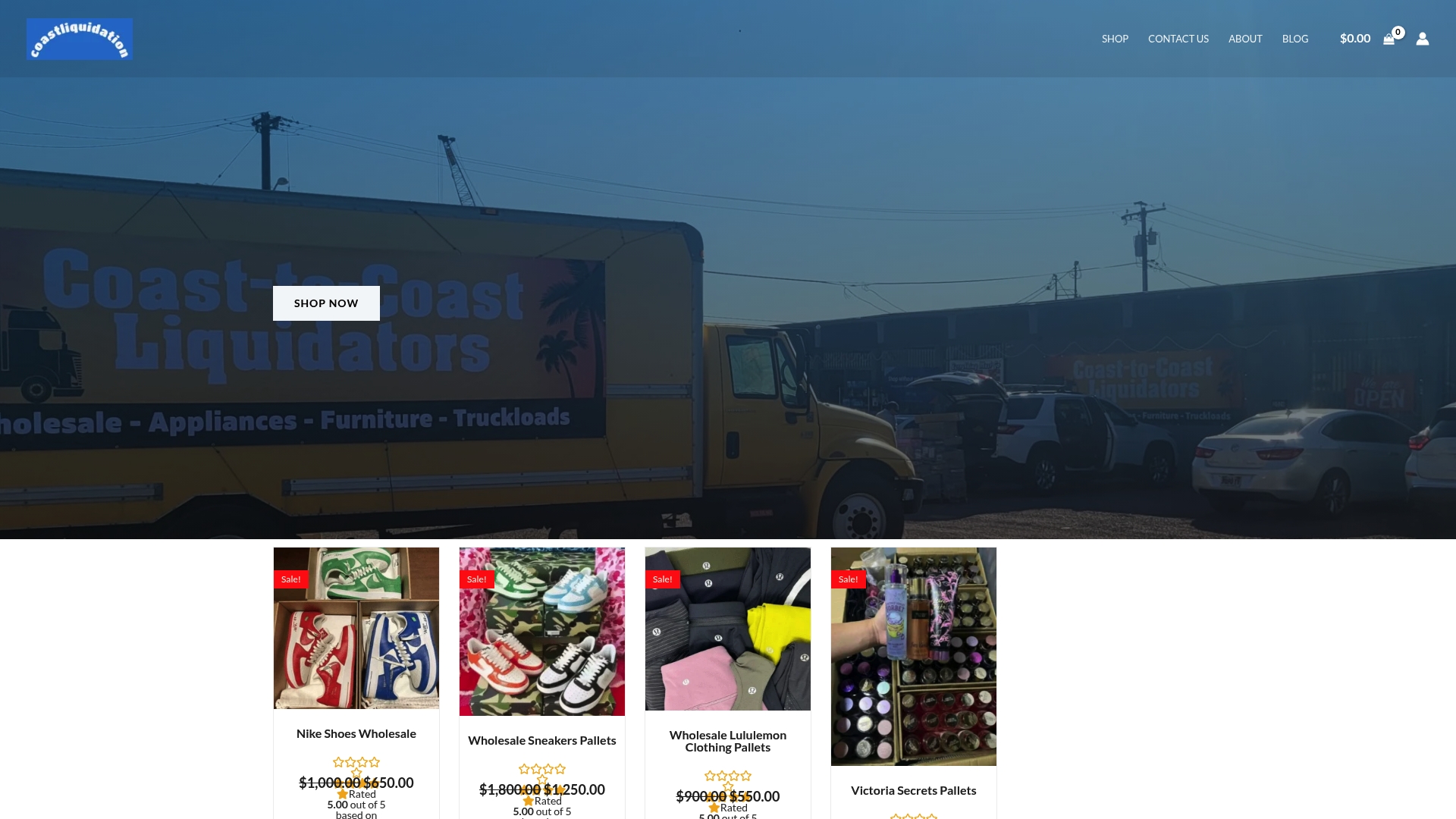
If you want to understand how our sourcing works before committing, learn about sourcing and see why retailers across the country rely on us for consistent, authentic inventory. We offer free shipping on orders above $300 and up to 50% off retail prices. Explore the full liquidation benefits and see how bulk purchasing can work for your resale business today.
If a local warehouse feels like a better starting point than a shipped pallet, see our comparison of liquidation pallets near me: local pickup vs. nationwide shipping.
Frequently asked questions
What is the average cost to buy a liquidation pallet?
Most pallets range from $400 to $800 for the pallet itself, and shipping adds another $400 to $800 via LTL freight. Manifested pallets from Tier 1 sources often cost more upfront but carry lower risk.
How risky is buying liquidation pallets for resale?
Risk is real: 20 to 50% of items may be unsellable in some pallets, returns are almost never accepted, and quality varies widely. Buying manifested pallets from established platforms significantly reduces your exposure.
Do I need a resale certificate to buy liquidation pallets?
Yes. Major platforms require a resale certificate to verify your business status and enable tax-free purchasing. Apply through your state’s revenue department before registering on any platform.
What ROI can resellers expect from liquidation pallets?
Realistic returns on manifested pallets are 1.5 to 2.5 times your total cost, with experienced sellers achieving 40 to 120% margins depending on niche and sourcing quality.
Which platforms are safest for buying brand-name liquidation pallets?
B-Stock, Liquidation.com, and Direct Liquidation are the most established and transparent options. Avoid unvetted sellers on social media, where scams are common.
Recommended
- Finding Liquidation Pallets Near You: A Guide for Local Retailers and Resellers – liquidation pallets
- Is Buying Liquidation Pallets Profitable? A Retailer’s Guide – liquidation pallets
- Blog – liquidation pallets
- Are Liquidation Pallets Really Worth the Money? – liquidation pallets
Article generated by BabyLoveGrowth
Curious what a pallet will actually cost before you commit? See our full pricing guide by category.

I’ve been in the resale game for two years and still learned things from this guide I wish I’d known from day one. The section on vetting liquidation companies alone saved me from making a very costly mistake. Clear, practical, and no fluff — exactly what I needed.
What sets this guide apart is the honesty. It doesn’t just hype you up — it tells you the real risks AND how to manage them. The tips on inspecting pallets before buying and negotiating with suppliers were genuinely game-changing for my business.
I was nervous about spending hundreds of dollars on a pallet I’d never seen in person. This guide gave me the confidence and the checklist I needed. The step-by-step breakdown made the whole process feel manageable. My first purchase was a huge success — thank you!
I’ve read a lot of content about liquidation buying online and most of it is vague or outdated. This guide is different — it’s current, specific, and actually tells you where to go and what to do. The platform comparison section alone is worth it. My buying strategy has improved dramatically.
I’ve read a lot of content about liquidation buying online and most of it is vague or outdated. This guide is different — it’s current, specific, and actually tells you where to go and what to do. The platform comparison section alone is worth it. My buying strategy has improved dramatically.
This guide completely changed the way I approach liquidation buying. Before reading it, I was wasting money on mystery pallets with no real strategy. Now I know exactly what to look for, which platforms to trust, and how to calculate my potential ROI before spending a dime. Highly recommend to anyone serious about reselling!
I started with zero experience and this guide walked me through every single step. From understanding manifests to knowing what condition codes mean, it felt like having an expert right beside me. I bought my first pallet last month and already turned a profit
As someone who sources inventory for Amazon, finding reliable liquidation pallets at the right price is everything. This guide taught me how to calculate true landed costs, avoid low-quality lots, and build relationships with reputable suppliers. My margins have improved significantly since applying these strategies. A must-read!